
In this Article

By: All Allied Health Staff
Colorado is a particularly attractive state for veterinary technicians due to several unique factors:
- High demand for vet tech skills: Colorado has a strong culture of pet ownership, with many residents owning pets and prioritizing their care. This leads to a higher demand for veterinary services. The state’s significant agricultural sector and outdoor lifestyle mean that there is a constant need for veterinary care for both pets and livestock.
- Competitive wages: Veterinary technicians in Colorado may enjoy competitive salaries compared to the national average. The demand for skilled vet techs in urban centers like Denver and Boulder contributes to this trend.
- Proximity to education: Colorado offers several accredited veterinary technology programs, such as those at Colorado Mountain College and Front Range Community College. The state is also home to Colorado State University’s College of Veterinary Medicine and Biomedical Sciences, a leading institution in veterinary education and research. This proximity offers vet techs opportunities for continuing education, advanced training and collaboration with veterinary professionals.
- Quality of life: The state’s emphasis on health and wellness extends to pet care, promoting a holistic approach to veterinary services that many vet techs find rewarding.
- Cutting-edge veterinary medicine: Colorado is known for its innovative approaches to veterinary medicine, including advancements in pet healthcare, research and technology. Vet techs in the state have the opportunity to work in dynamic and progressive environments.
Quick view of vet techs in Colorado
There are 4,400 people employed as veterinary technicians and technologists in Colorado, said the BLS. This equates to nearly 1.5 people for every 1,000 working as a vet tech. The median wage per hour is $23 and the forecasted job growth for the coming decade is 9.1%, considerably higher than the job growth rate for all other career fields combined, said the BLS.
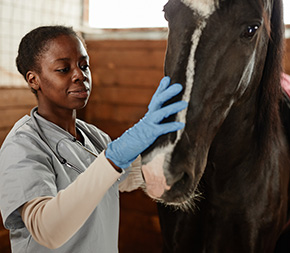
Veterinary technicians in Colorado perform a wide range of duties that support veterinarians and ensure the well-being of animals. Their responsibilities include conducting clinical tasks such as taking medical histories, collecting and processing laboratory samples, administering medications and vaccines, performing diagnostic imaging and assisting in surgeries. They also provide essential care and monitoring for hospitalized animals, educate pet owners on health maintenance and manage administrative tasks such as record-keeping. Given Colorado’s diverse environment, vet techs may work with pets, livestock and wildlife, reflecting the state’s mix of urban, mountain and rural areas. Five potential employers of vet techs in the state include:
- Colorado State University Veterinary Teaching Hospital, Fort Collins, CO:
- CSU VTH is a leading veterinary teaching hospital offering advanced care and innovative research. Vet techs here work in specialized departments, including oncology, cardiology and emergency medicine, contributing to both clinical practice and educational programs.
- National Jewish Health Biomedical Research, Denver, CO:
- National Jewish Health is a renowned institution for respiratory and immune diseases. Vet techs at this facility may work in research laboratories, assisting with studies that often involve animal models, contributing to significant medical advancements.
- VCA Animal Hospitals, Multiple locations Denver and Boulder, CO:
- VCA operates several animal hospitals across Colorado. These hospitals provide comprehensive veterinary services for pets, offering vet techs opportunities in routine and specialized pet care, diagnostics and surgery.
- Animal Health International, Multiple locations, CO:
- With facilities throughout Colorado, Animal Health International supplies products and services for livestock and large animals. Vet techs here focus on herd health management, preventive care and supporting veterinary interventions for livestock.
- Cheyenne Mountain Zoo, Colorado Springs, CO:
- Cheyenne Mountain Zoo provides care for a wide range of exotic and wild animals. Vet techs working at the zoo are involved in diverse activities, including health assessments, medical treatments and supporting conservation efforts.
Salary quick stats
While the median national salary for vet technicians and technologists—is just over $45,980 a year, pay may vary depending upon several factors, including where you work and live, how much experience you have, what kind of animals you work with and your employer type, what specialty certifications you have earned and your level of education.
Median veterinary technician salary in Colorado
The median annual salary for veterinary technicians and technologists in Colorado is $48,360. Veterinary technician salaries in Colorado can vary based on factors such as experience, location, type of employer and specialization. However, they tend to be competitive, especially in urban areas, though Colorado does not rank in the top five paying states in the U.S. said the BLS. You can find the median national wage along with data for different metro areas in Colorado, listed by highest paying cities first, below. You can see that Denver, Boulder and Fort Collins are the top three highest paying areas in the state.
Veterinary Technologists and Technicians


10%$36,840
25%$41,770
50%$48,360Median
75%$56,380
90%$59,070
Median Hourly Wage$23
Job growth9.1%
Total Employment3,990
| Metro area | Median Salary | Bottom 10% | Top 10% |
|---|---|---|---|
| Denver-Aurora-Centennial, CO | $49,870 | $38,190 | $59,190 |
| Fort Collins-Loveland, CO | $48,560 | $36,880 | $61,920 |
| Boulder, CO | $48,190 | $37,670 | $59,860 |
| Colorado Springs, CO | $47,700 | $36,660 | $58,070 |
| Greeley, CO | $45,920 | $36,400 | $57,380 |
| Pueblo, CO | $44,090 | $34,600 | $50,260 |
| Grand Junction, CO | $42,490 | $32,200 | $46,580 |
Source: U.S. Bureau of Labor Statistics (BLS) 2024 median salary; projected job growth through 2034. Actual salaries may vary depending on location, level of education, years of experience, work environment, and other factors. Salaries may differ even more for those who are self-employed or work part time.
Salary range for Colorado vet techs
The salary range for vet techs in Colorado typically spans from $36,840 to $59,070 per year.
Veterinary technicians just starting their careers in Colorado typically earn between $30,000 and $35,000 annually, while those with several years of experience or who work as veterinary technologists may earn more. Vet techs with specializations—such as anesthesia, emergency care or zoological medicine—or advanced certifications may earn upwards of $50,000, with some positions potentially paying higher.
A word about vet technicians and technologists and why salaries may differ:
Veterinary technologists are similar to vet techs, but there’s a difference in terms of education needed to do the job. Veterinary technologists hold a bachelor’s degree in veterinary technology, which may provide more opportunities to advance in the field. Consequently, technologists may earn more than technicians. Technicians could choose to advance to technologist roles by completing two additional years of school beyond their associate degree and being granted a bachelor’s.
Pay by metro areas in Colorado
Your earning level may depend upon where you live within a state. For example, cities tend to pay better than rural or less populated areas. If your city is an industry hub such as Denver, Boulder or Fort Collins, pay may be more competitive. That said, here’s what the BLS reported as highest paying cities in the U.S.
While Colorado has no metro areas in the top 10, the BLS said that Colorado does hold the number one spot in the U.S. for states with the highest concentration of jobs. They also said that the Fort Collins metro area specifically has the highest concentration of jobs, ranking it at number three in the U.S.
Salary growth and job outlook
The BLS predicted a strong market for vet techs nationally, with a much faster than average job growth rate of 9.1%. The overall job market for vet techs in Colorado is growing, providing numerous opportunities for employment and career advancement. There is also a supportive professional community in Colorado, with organizations such as the Colorado Association of Certified Veterinary Technicians offering resources, continuing education, certification support and networking opportunities for vet techs in the state. The presence of active professional organizations fosters a strong community and advocacy for the veterinary profession, helping vet techs feel welcomed, connected and supported.
Factors affecting salaries in Colorado
Besides education, location and experience on the job, here are three factors that can influence a veterinary technician’s salary in Colorado:
- Type of employer:
- Vet techs working in specialty or emergency veterinary hospitals may often earn higher salaries compared to those in general private practices due to the advanced skills and higher stress levels involved. Positions at research institutions, such as those at universities or pharmaceutical companies, may also offer higher pay and more comprehensive benefits compared to standard clinical roles. Some corporate veterinary chains might offer more standardized pay scales and benefits packages compared to independent clinics, which can vary widely in terms of compensation.
- Specialization area and professional certifications:
- Vet techs who obtain advanced certifications, such as in anesthesia, dental technology, emergency and critical care or zoological medicine, may command higher salaries. These specializations often require additional training and certification but are highly valued in the veterinary field. Specific skills, such as proficiency in advanced diagnostic techniques, surgical assistance or specialized animal care may also lead to higher compensation.
- Work hours and shift:
- Vet techs who work overtime hours often receive additional pay, which can significantly boost their overall earnings. Working night shifts, weekends or holidays typically comes with shift differentials—additional pay to compensate for less desirable working hours. Too, full-time positions generally offer higher annual salaries and better benefits compared to part-time or per diem positions, which might have higher hourly rates but less job stability and fewer benefits.
What to do if you think you are being paid unfairly as a vet tech in Colorado
If you believe your pay as a veterinary technician in Colorado is unfair, there are several steps you can take to address the issue and seek assistance. Here are some actions you can consider, including state government bureaus that can help:
Steps to address pay discrepancies
Research and document:
- Compare salaries: Use online resources such as Glassdoor, Payscale or the U.S. Bureau of Labor Statistics to compare your salary with industry standards in Colorado.
- Document evidence: Gather evidence of your job responsibilities, performance and any salary data you can find for comparable positions.
Do an internal review:
- Talk with your employer: Schedule a meeting with your supervisor or HR department to discuss your concerns. Present your findings and make a case for why you believe your pay is unfair.
- Seek clarification: Ask for clarification on the criteria used for salary determination and whether there are opportunities for raises or promotions.
- Seek professional advice: Reach out to professional organizations like the Colorado Association of Certified Veterinary Technicians (CACVT) for advice and support. They can provide guidance on industry standards and help you navigate your options.
State government bureaus and legal assistance:
- Colorado Department of Labor and Employment (CDLE): The CDLE’s Wage and Hour Division handles complaints related to wage disputes, including unpaid wages, minimum wage violations and overtime pay issues. You can file a wage complaint with the CDLE if you believe your employer is violating state wage laws. The CDLE will investigate and can help resolve the issue. You should be prepared to provide details about your employer, your job, the nature of your complaint and offer any supporting documentation.
- Equal Pay for Equal Work Act: This Colorado law aims to ensure pay transparency and equity. If you believe you are being paid unfairly due to discrimination based on gender or other protected characteristics, you can file a complaint under this act.
- Legal assistance: If internal resolution and state resources do not resolve your issue, consider consulting with an employment attorney. They can provide legal advice and help you understand your rights and options.
Education and training in Colorado
To become a veterinary technician in Colorado, you need to follow a series of educational and certification steps. Here’s a detailed outline of the process:
- Graduate from high school: Ensure you complete your high school education or obtain a GED. Focus on courses in biology, chemistry and mathematics, as these will provide a strong foundation for your future studies.
- Choose an accredited program: Select a veterinary technology program accredited by the American Veterinary Medical Association (AVMA). Colorado has several accredited programs, such as those offered by Front Range Community College and Colorado Mountain College.
- Complete the program: These programs typically award an associate degree in veterinary technology and take about two years to complete. The curriculum includes both classroom instruction and hands-on clinical training in areas such as animal anatomy, physiology, pharmacology, anesthesia, surgical nursing and laboratory techniques.
- Gain practical experience: During your veterinary technology program, participate in internships or externships. These practical experiences are often required as part of your coursework and provide valuable hands-on training in real-world veterinary settings.
- Prepare for the VTNE: Study for the Veterinary Technician National Examination, which is administered by the American Association of Veterinary State Boards (AAVSB). The VTNE covers nine domains, including pharmacy and pharmacology, surgical nursing, and diagnostic imaging.
- Register for and pass the exam: Register for the VTNE through the AAVSB website. The exam is offered three times a year, and you must pass it to become a credentialed veterinary technician.
- Apply for state certification: Apply for certification with the Colorado Association of Certified Veterinary Technicians (CACVT). You will need to provide proof of graduation from an accredited program and submit passing scores from the VTNE.
- Maintain your certification: Stay certified by completing continuing education (CE) requirements. The CACVT requires certified veterinary technicians to complete a certain number of CE hours within each renewal period to maintain their certification and stay current with industry practices and advancements.
- Renew your certification: Regularly renew your certification with the CACVT as required. This typically involves submitting proof of CE hours and paying a renewal fee.
Cost of living considerations in Colorado
The cost of living in Colorado is generally higher compared to the national average. Housing costs are considerably higher than other states.
RentCafe says the cost of living in Colorado is around 6% higher than the national average, with housing at 20% higher than the national average. While food and healthcare costs are also higher, utilities run around 4% lower than the national average. Here are costs of living for some of the major cities in Colorado. Note that the Boulder Chamber Economic Council says that Boulder’s cost of living is higher than the Denver metro area average, due primarily to housing costs that are comparable to other high-tech, progressive and well-educated cities offering a desirable quality of life.
| Colorado city | Cost of living (versus the national average) |
|---|---|
| Denver | 11% higher |
| Westminster | 8% higher |
| Colorado Springs | 8% higher |
| Fort Collins | 11% higher |
Colorado professional associations
Here are two professional organizations specifically for veterinary technicians in Colorado. These organizations provide valuable resources, support and professional development opportunities for vet techs in the state:
Colorado Association of Certified Veterinary Technicians (CACVT): The CACVT is the primary professional organization representing certified veterinary technicians in Colorado. It provides support, advocacy and resources for vet techs in the state. It also oversees the certification process for vet techs in the state.
Colorado Veterinary Medical Association (CVMA): The CVMA is a broader professional organization that includes veterinarians, vet techs and other veterinary professionals. It offers various resources and support for members across the state, including professional development and job resources.
Find comprehensive vet tech salary guides for your state: California | Colorado | Florida | Georgia | Indiana | Massachusetts | Michigan | New Jersey | New York | Ohio | Texas
This vet tech salary guide for Colorado strives to provide you with a comprehensive understanding of the salary landscape and key information regarding the profession. Use this guide as a starting point to make informed decisions about your career path, negotiating salaries and for setting realistic expectations for your educational and professional future.