

In this Article


Professional insights: Aniqa Miazi
To become a medical transcriptionist, you typically need a high school diploma and postsecondary training in medical terminology, anatomy and physiology, grammar and medical transcription. Many employers prefer candidates who have completed a certificate program, while professional certification is optional. Medical transcriptionists may work in healthcare facilities, transcription services or remote settings.
Becoming a medical transcriptionist appeals to different kinds of people. Some love the emphasis on storytelling as they record notes of a patient-provider visit. Others appreciate the excitement of working in a high-stakes environment like an emergency room. People who aspire to become a doctor, nurse, physician assistant or other healthcare provider use the job to get on-the-floor experience often required by graduate programs.
Medical transcriptionist at a glance
Key Takeaways
- A medical transcriptionist, or medical scribe, provides valuable experience in the healthcare field, often serving as a stepping stone to advanced medical careers.
- To become a medical transcriptionist, you typically need a high school diploma and must complete training, whether through job training, a certificate program, or an associate degree.
- Certification, while optional, may enhance job prospects and includes exams from the Association for Healthcare Documentation Integrity (AHDI).
- Medical transcriptionists work primarily in hospital settings, and they have options to work remotely as telescribes, especially with the rise of digital healthcare.
Medical transcriptionist job overview
“Being a medical transcriptionist, also called a medical scribe, is a really effective way to gain exposure to what it’s like to be a doctor and see patients,” said Aniqa Miazi, a medical scribe with the third-party contracting company ScribeAmerica.
A medical transcriptionist role is an excellent entry-level job in the medical field. It doesn’t require long (and expensive) schooling, yet you’re working closely with doctors and other medical providers who are helping patients.
“I’m not treating anyone, but I’m literally shadowing the doctors I work with,” Miazi said. “I’ve learned an enormous amount of information about what it’s like to be a doctor, the process of diagnosing, and medicine itself.”
This field is changing in large part because of advances in technology and artificial intelligence (AI). It can still be a good career option, especially for those looking to make it a stepping stone to post-graduate education or another medical-related position.
Want to get your foot in the door? Becoming a medical transcriptionist might be your way to do just that.
Medical transcriptionist vs. medical scribe
People often use the terms medical transcriptionists and medical scribes interchangeably, but they can have a few differences:
- Medical transcriptionists traditionally convert recorded or dictated speech into written medical documentation.
- Medical scribes document patient-provider encounters in real time or virtually.
- Clinical documentation specialists or editors may review, correct, format or quality-check AI- or speech-recognition-generated documentation.
To complicate matters further, some jobs today combine the duties traditionally associated with both transcriptionists and scribes, and then use one job title or the other.
Steps to becoming a medical transcriptionist
“Being a scribe keeps you motivated,” Miazi explained, who aims to eventually become a physician assistant. “You’re surrounded by EMTs, nurses and doctors. This job keeps you focused on what you need to do to reach your goals.”
If you’re looking to enter the field, you’ll need to follow the steps in one of these paths.
Earn your high school diploma or GED.

This is the minimum education requirement for medical transcriptionists.
Earn your medical transcriptionist certificate or associate degree.
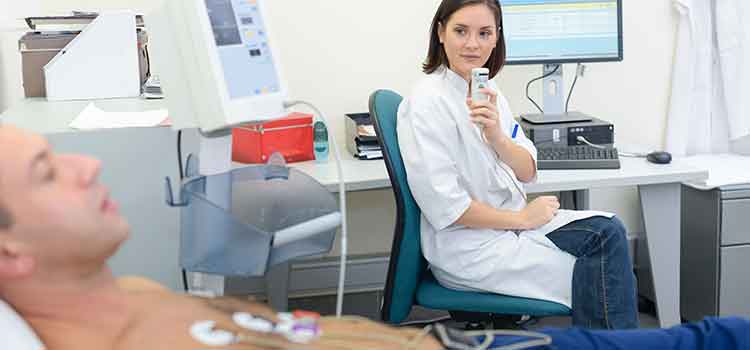
Enroll in a medical transcriptionist program, many of which are online and self-paced, or a program for an associate degree in medical transcription. Complete your coursework and graduate.
Gain practical experience.

Apply for in-person jobs or remote positions (called telescribes).
Consider additional education and certifications.

Certification is optional but can open additional doors in your career. You can take the Registered Healthcare Documentation Specialist (RHDS) exam or, after gaining work experience, the Certified Healthcare Documentation Specialist (CHDS).
If you’d like to jump into a medical transcriptionist job with just your high school diploma or GED, consider this alternate path:
- Earn your high school diploma or GED:
- This is the minimum education requirement for medical transcriptionists.
- Apply for a job at a medical transcriptionist contracting company:
- You’ll apply to jobs within commuting distance, except in the case of online positions (called telescribes).
- Complete the company’s course and pass the exam:
- Courses cover the fundamentals needed to be a medical scribe, from medical terminology and how to use an electronic medical records (EMR) platform to the duties of a medical transcriptionist.
- Complete three to five days of in-person training:
- This on-the-floor training orients you to the medical setting where you’ll work and gives you hands-on experience working with EMR.
- Begin work as a medical transcriptionist:
- Start your career at a hospital, medical office, or other healthcare facility.
What does a medical transcriptionist do?
“As scribes, we write down the story of why patients are here,” Miazi said. Patient symptoms, medical providers’ observations, results of an examination, histories, lab work and imaging all need to be properly recorded in the EMR.
Medical transcriptionists do much more than take down notes verbatim. They work side-by-side with doctors as they visit patients and come to understand the full picture of the patients’ health. Scribes do not talk directly to patients but rather listen and take direction from doctors, PAs, nurses and other clinicians.
They can do this in several ways, according to providers’ preferences or department policies. Some medical transcriptionists move from room to room with a clinician, taking down notes as they go. Others stay at a desk and wait for a provider to come to them and summarize what happened during a visit. Either way, they need to be good listeners and quick thinkers.
“Sometimes it’s not clear what a patient is saying, so you have to make out a coherent story,” Miazi said.
Medical transcriptionists also have to adjust to different medical providers’ preferences and medical record “style.” In a clinic or medical office, a scribe may work with only a few providers. In an emergency department, a scribe may need to work with 20 providers or even more.

Where can I work as a medical transcriptionist?
Most medical transcriptionists work in hospital settings. Emergency departments frequently make use of medical transcription services.
“In the ER, your days can bring the unexpected, and the things that bring people in are usually more severe,” Miazi said. In an emergency department, scribes can expect to be on the move during their entire shift and will need to keep up with a fast pace of work.
Other scribes work in clinics or medical offices. These jobs tend to be quieter. “You can expect what you’ll see throughout the day,” Miazi explained, so if you’re working in a cardiology department, you know that day will likely bring in patients with high blood pressure or cardiovascular disease.
Fewer scribes work in diagnostic and medical labs.
How do I know if I’m a good fit?
Medical transcription is an excellent place to begin a career in the medical field or transition to a new path. Successful scribes have several qualities and skills in common.
- Familiarity with technology:
- Technology is changing the field of medical transcription. Scribes need to know and understand current tools, such as EMR platforms, and be ready to pivot when others become available.
- Typing skills:
- Most medical transcriptionist positions require applicants type at least 40 to 50 words per minute. This speed helps you keep up with patients and providers.
- Adaptability:
- Scribes may need to adjust how they work to the preferences of clinicians. Some may want you to make rounds with them; others will want to share details of a visit after the fact.
- Attention to detail:
- Medical transcriptionists need to be precise and exacting, ensuring that a patient’s records are accurate. They must be able to record patient concerns to the highest level of specificity—for example, noting the type of fracture on which bone in the finger, rather than the general term “broken finger”—similar to the detail needed in medical billing and coding.
Can I work from home?
Yes, it is possible to work from home as a telescribe. This opportunity has become more common in recent years.
Telescribes have electronic access to an EMR platform, where they transcribe notes, write reports, and prepare discharge information for patients. They may receive calls from physicians who talk to them directly, or work from recorded voice messages.
Telescribes need a quiet home office environment where they can comply with medical privacy laws such as HIPAA.
A day in the life of a medical transcriptionist
“About 90% of my job is typing and talking to doctors,” Miazi said. While working in the emergency department, she is constantly on her feet and moving from room to room with a physician.
Medical transcriptionists need to maintain professionalism in all circumstances, even if a patient is in critical condition, is agitated or is hard to understand.
Many medical transcriptionist shifts are eight hours long. Since medical care is provided at all hours, medical scribes can work day or night.
What education do medical transcriptionists need?
Someone who wants to become a medical transcriptionist has several education options that lead to this career.
You can become a medical scribe with a high school diploma or GED. That said, other people opt to pursue additional education. It’s even possible to begin working as a medical scribe while you’re earning your degree.
Wondering what route to medical transcription is best for you? These are your options.
High school diploma/GED plus job training
What to look for: A third-party medical transcription company that provides training.
Prerequisites: High school diploma or equivalent, plus minimum typing speed of 40 to 50 words per minute.
Curriculum: The course a medical transcription company offers will include the fundamentals required for an entry-level scribe, including medical terminology and anatomy, medical procedures, imaging and HIPAA compliance.
Time to complete: This training is typically self-paced but must be completed before hiring.
Certificate program
What to look for: A program that can demonstrate success of past graduates.
Prerequisites: High school diploma or equivalent.
Curriculum: Coursework covers computer skills, typing, medical terminology and ethics.
Time to complete: About one year.
You should also know: There is a difference between graduating from a certificate program and becoming a certified medical transcriptionist. Completing a certificate program will prepare you to work as an MT, but you will need to pass a certification exam administered by the Association for Healthcare Documentation Integrity (AHDI) to earn a certification.
Associate degree
What to look for: An accredited program that offers a focus in medical transcription. Other emphases, such as health care IT or health services, can lead to a career in medical transcription.
Prerequisites: High school diploma or GED.
Curriculum: Coursework covers communication and English, medical terminology, practices of medical transcription and ethics.
Time to complete: About two years.
You should also know: It is often possible to transfer credits from an accredited associate program to a bachelor’s program.
What about online medical transcription programs?
Yes, many medical transcriptionist programs are offered partly or entirely online.
Medical transcription does not require a lot of hands-on education (unlike careers that require clinical practice, such as nurses, physician’s assistants or chiropractors). This makes it a good fit for online programs.
Many digitally-based medical transcription programs are self paced. This option can help people pursue the career while fulfilling other responsibilities, such as caregiving or work.
Medical transcriptionist licensing and certification
Certification for medical transcriptionists is optional, and there is no standard licensing requirement. That said, many employers look for certification when hiring medical scribes.
You can become certified by taking and passing an exam provided by the AHDI. The organization offers four different certifications for medical transcription professionals.
The exams include multiple choice questions covering the processes, ethics, systems and terminology needed as a medical transcriptionist. They also include questions in which test takers will listen to an audio clip and transcribe portions of the recording.
Registered Healthcare Documentation Specialist
What it is: Certification for entry-level medical transcriptionists
Who it’s for: Recent graduates of a certificate or degree program and medical transcriptionists with less than two years of professional experience in a single-specialty environment (such as private practice or radiology).
What it includes: The RHDS exam includes multiple-choice questions covering the processes, ethics, systems, and terminology needed as a medical transcriptionist. It also includes questions in which test takers will listen to an audio clip and transcribe portions of the recording.
Exam prep: Certificate and degree programs prep
Certified Healthcare Documentation Specialist
What it is: Certification for more advanced medical transcriptionists
Who it’s for: Medical transcriptions with at least two years of professional experience in acute-care or multi-specialty settings. Candidates for this certification must either already have the RHDS or take the combination RHDS/CHDS exam.
What it includes: The CHDS includes a multiple-choice portion that covers clinical medicine and health information technology. It also provides audio clips where test takers must transcribe portions of the recordings or edit transcriptions.
Exam prep: On-the-job experience prepares you for much of the exam, but it is wise to take practice tests and review the skills described in the Level 2 definition of the MT Model Job Description.
Certified Healthcare Documentation Professional
What it is: Certification for multiple types of healthcare professionals that document patients’ health.
Who it’s for: Anyone who documents patients’ health including practitioners, clinician-created documentation auditors/analysts, allied health professionals and transcriptionists/scribes.
What it includes: The CHDP exam includes multiple-choice and fill-in-the-blank questions that cover clinical medicine, health information technology and compliance, and documentation standards and patient risk evaluation.
Exam prep: The AHDI strongly encourages candidates to review the CHDP exam blueprint to ensure they are competent in the required knowledge areas before registering for the exam. From there, they offer multiple study resources for those preparing to take the exam.
Certified Veterinary Healthcare Documentation Professional (CVHDP)
What it is: Certification for medical transcriptionists and scribes in veterinary settings.
Who it’s for: Anyone who documents veterinary patients’ health including veterinary transcription students, veterinary scribes and veterinary technicians.
What it includes: The CVHDP exam includes multiple-choice and fill-in-the-blank questions that cover the same topics as the CHDP exam but as they apply to veterinary medicine.
Exam prep: The AHDI offers multiple study resources for candidates including a study course and practice exam.
Median annual salary for medical transcriptionists today
Medical transcriptionists earn a median annual salary of $40,410, according to the U.S. Bureau of Labor Statistics (BLS). Salaries can differ by state, region and workplace setting.
Take a look at median salaries by state.
Of course, experience plays into a medical transcriptionist income.
Earning a certification can also impact both salary and the jobs for which you are qualified. A MT certification, such as RHDS, can make you more competitive for jobs. This is especially true for those who are hired directly by a medical organization, as opposed to a scribe working for a third-party contracting company.
Some medical transcriptionists are paid according to how many transcriptions they produce. In this case, increasing your accuracy and typing speed can increase your pay.
Highest paying metro areas
In general, metropolitan areas see higher median wages for medical transcriptionists.
When considering where to work, look at salaries as well as cost of living, as it generally costs more to live in a city.
These are the highest-paying metro areas in the U.S, according to the BLS.
Where are medical transcriptionists employed?
Medical transcriptionists work in a variety of healthcare-related settings and some cities employ more than others.
This is how employment numbers stack up by metro area, based on information provided by the BLS.
What’s the job outlook like for medical transcriptionists?
Overall, the BLS projects a -4.4% decline in medical transcriptionist jobs through 2035. Technology is drastically changing the field of medical transcription. At the same time, the aging population in the U.S. and the prevalence of chronic health conditions is increasing the demand for and quantity of care.
These two factors result in a push-pull on the future of medical transcription.
On the one hand, advances in speech-recognition technology natural language processing (NLP) tools enable doctors and other providers to dictate directly into these platforms, which create a transcription automatically. This method appeals to some organizations, but it is prone to mistakes.
On the other hand, medical transcriptionists make a strong business case for using a human scribe. They point out that doctors can spend as much time on paperwork, including medical notes, as they do with patients. “Doctors can spend a significant amount of time documenting on computers. That takes away from time spent with patients and the number of patients they’re able to see,” Miazi explained.
Some organizations continue to use, or even ramp up their use of, medical transcriptionists for this reason: Helping care providers become more efficient impacts revenue and can make medical organizations more profitable.
The bottom line is that while many medical organizations are transitioning to technology-based documentation, others continue to work with medical transcriptionists.
In addition, many people become medical transcriptionists not as a long-term commitment but as a part of a larger career trajectory. “I absolutely recommend this job to anyone who wants to gain exposure to the medical field and who may want to become a doctor, nurse, PA or other medical job,” Miazi said.
Frequently asked questions (FAQ)
How long does it take to become a medical transcriptionist?
Most people can become a medical transcriptionist in several months to about one year, depending on the training program they choose. Many employers prefer candidates who have completed a postsecondary certificate program or associate degree covering medical terminology, anatomy, physiology, grammar and transcription techniques. The exact timeline varies based on whether you study full time or part time.
Do you need to be certified to become a medical transcriptionist?
Certification is not required to work as a medical transcriptionist, but earning a professional credential may improve your job prospects and demonstrate your knowledge to employers. Some professionals choose to pursue certification after gaining experience in the field. Requirements vary by employer, so it’s a good idea to review job postings in your area to see whether certification is preferred.
Will AI replace medical transcriptionists?
Artificial intelligence and speech-recognition technology have changed the medical transcription profession, but they haven’t eliminated the need for skilled documentation professionals. Many healthcare organizations now use AI-assisted transcription tools that automatically generate clinical notes. Medical transcriptionists may increasingly focus on reviewing, editing and correcting these AI-generated documents to ensure they are accurate, complete and compliant with healthcare documentation standards.