In this Article


By: Kendall Upton

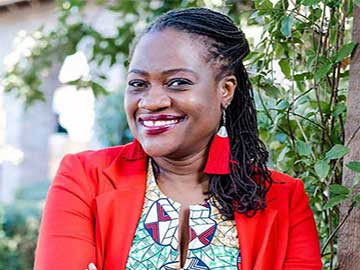
Professional insights: Mindy Lu
Like so many other mental health conditions, evidence of eating disorder behavior has appeared throughout history but wasn’t fully understood—or even named—until relatively recently. In the early 20th century, for example, medical professionals believed that eating disorders were caused by complications in the endocrine system. Only in the mid-20th century did professionals begin to understand that eating disorders were mostly psychological in nature.
But even though we understand eating disorders better today than we did a hundred years ago, the statistical prevalence of eating disorders has only increased over time. For instance, one study concluded that the prevalence of eating disorders doubled between the 2000-2006 and 2013-2018 periods. And according to data compiled by the National Eating Disorders Association (NEDA), approximately 9% of the U.S. population will have an eating disorder in their lifetime.
People that struggle with an eating disorder often receive care from a team of professionals that include doctors, therapists, nutritionists and dietitians.
Nutritionists and dietitians can be some of the most useful healthcare team members to help people manage and ultimately overcome an eating disorder. Their expertise extends beyond simply how to cultivate a healthy diet that provides sufficient nourishment—they also understand how to help people develop a healthier relationship with food.
What are eating disorders?
Eating disorders are serious mental health and medical conditions that manifest as unhealthy thoughts and behaviors involving food. They can lead to numerous other medical problems including obesity, malnourishment, heart and kidney problems and can even be fatal.
Many people struggle with body image issues or overindulging in food from time to time. Others may fast (abstaining from food for an extended period) for personal or religious reasons. These behaviors don’t automatically mean someone has an eating disorder. But when these thoughts and behaviors become so severe that they significantly deteriorate someone’s mental and physical health, that’s when there’s cause for concern.

Many people struggle with body image issues or overindulging in food from time to time.
Anyone can develop an eating disorder, but they are more common in women. They usually emerge when someone is a teenager or young adult, but they can appear at any point in someone’s life.
The most common eating disorders include:
Binge-eating:
Eating to extreme excess, characterized by eating even after you are full or uncomfortable. Periods of binge-eating are often followed by intense feelings of guilt, shame and distress.
Bulimia nervosa:
People with bulimia nervosa also experience episodes of binge-eating followed by “purging,” primarily through making oneself throw up. They may also engage in intense exercise and fasting.
Anorexia nervosa:
People with anorexia nervosa severely limit their eating, avoid food and may restrict themselves to eating only very small quantities of certain foods. Many people with anorexia perceive themselves as overweight even when they are severely underweight.
Anorexia nervosa is the least common, but it is often the most serious. It has one of the highest mortality rates of any mental health disorder.
Like many other mental health conditions, there are aspects of eating disorders that we still don’t fully understand. Researchers and medical professionals generally believe that eating disorders are caused by a combination of genetic, biological, behavioral, psychological and social factors
How nutrition professionals can help people with eating disorders
Nutritionists and dietitians bring a host of specialized skills to the table that can be beneficial for folks dealing with an eating disorder and help set them on a path to recovery.
Mindy Lu, a Certified Nutritionist (CN) and Licensed Mental Health Counselor (LMHC), is the Clinical Director of Sunrise Nutrition, a private nutrition practice group that specializes in helping treat eating disorders. Lu, who is a first-generation Taiwanese American, has always felt that her cultural heritage is largely responsible for her personal relationship with food.
“Food is my family’s love language. It’s how we communicate with one another. It’s how we show each other that we care for one another. I feel like that’s where the seed for my love of food comes from,” Lu said. “Food is never just about the food. It’s about how we navigate through the world. Food is so tied to how we experience our bodies and how we identify with and relate to other people.”
Lu carved out her own niche within the field when she noticed a lack clinical space tailored specifically to the eating disorder experiences of non-white people and immigrants. “That’s the stuff that brings me joy, that I light up with,” she said.
Daily food decision-making
We make countless decisions about food every single day. When to eat, what to eat, how much—the list goes on. For many people, these decisions are for the most fairly easy and uncomplicated. For others, they can be debilitating. That’s where nutritionists and dietitians can step in.
“Oftentimes, people will ask, ‘What’s the difference between a dietitian talking about a relationship with food and a therapist talking about a relationship with food?’ The scope of practice is different, and so a lot of times dietitians will help with the day-to-day decision making,” Lu said. “A lot of clients also have difficulty with executive functioning and so really helping folks with meal planning and timing of food. I would say that there’s also a lot of skill building when you’re working with a dietitian or nutritionist. How do we meal plan? How do we put together a meal?” ovarian syndrome (PCOS), for example, might otherwise struggle to find enough clients if they must live within a commutable distance of an office location.
Education about the science of food and nutrition
Throughout their education and training, dietitians and nutritionists become experts in the science of nutrition.
“They have the knowledge of the science and the biochemistry around food. There are some clients who process information through that lens, and so it’s nice to really be able to sit down and talk about what’s actually going on in your body, and this is why we need grains throughout the day, for example. Or somebody who might be managing their blood sugar and a conflicted relationship with food, we can talk about how those two things kind of go hand in hand,” Lu said.
Quelling intrusive thoughts
One major aspect of eating disorders is the barrage of intrusive thoughts about food that lead to unhealthy behaviors.
“We can do a lot of coaching through that, asking, ‘What do we do with those thoughts? What do we do with the really big feelings that come up around food and meals?’” Lu said. “Something that I really love about dietitians and nutritionists is they can do a lot of experiential work. For example, sitting down with the client and having a meal together. Then there can be some in-the-moment food coaching.”
Restoring autonomy
“From a nutritionist perspective, most eating disorders are rooted in restriction of some sort,” Lu said. “Even though somebody will say that they’re bingeing a lot or purging, it is always a restrict-binge-purge cycle. If there is no purging, it’s often a restrict-binge cycle. With a dietitian or a nutritionist, we will sit down and talk about where the restriction is coming from. And we’ve noticed it’s not always a restriction of food. Sometimes folks will restrict joy, or the restriction of autonomy or the restriction of agency, will lead them then to binge on food as a proxy.”
From there, nutritionists and dietitians can help clients target where the restriction is coming from and transition away from restriction into nourishment.
“Nourishment looks different for everybody,” Lu said. “What we try to do is really take the client’s lead on what does recovery look like for them specifically, just because agency and autonomy looks different for everybody. Something that we really try to do is help folks nourish themselves consistently and adequately. And it’s not just the science behind it, but the psychology, too—helping folks really work through those intrusive thoughts or the black-and-white thinking. We also do a lot of education around diet culture and helping folks reclaim their relationship with food outside of diet culture.”
How to specialize in eating disorders as a nutritionist
If you’re interested in kickstarting a career as a nutritionist and specializing in helping clients that are struggling with eating disorders, the first step is to fulfill the basic requirements needed to work as a nutritionist.
But before we get ahead of ourselves, it’s important to make a distinction between nutritionists and dietitians. All dietitians are nutritionists, but not all nutritionists are dietitians. That’s because dietitians are a regulated job title. Dietitians must be licensed by in almost every state and the majority have the Registered Dietitian (RD) or Registered Dietitian Nutritionist (RDN) credential obtained through the Commission on Dietetic Registration (CDR), which is separate from state licensure entities. The RD/RDN credentials are the exact same thing—which title someone uses is a matter of professional preference.
By contrast, the title of “nutritionist” is not as regulated. Some states have licensing laws for nutritionists, while others don’t. This means people may call themselves nutritionists with minimal education and training depending on where they live, but the majority of them do have legitimate credentials such as RD/RDN and/or other state-specific nutritionist licenses, if available.
The first step towards a nutrition career, therefore, should be to explore your state’s licensing laws and go from there.
Some people that want to help clients who are struggling with eating disorders also choose to obtain credentials related to mental health counseling. That’s what Lu has—she’s a Certified Nutritionist (a title specific to Washington state where she works) and a Licensed Mental Health Counselor (LMHC).
Dietitian and nutritionist credentials
Almost all dietitians earn the RD or RDN credential through the CDR. According to the CDR, applicants must complete the following to qualify:
Remember that most states also require you to be licensed as a dietitian by the state itself. Although requirements to do so vary by state, all states accept the RD/RDN credential for state licensure purposes.
Getting credentialled as a nutritionist is a little different. Requirements vary by state, and some states don’t even offer licenses for nutritionists. If you are an RD/RDN, that satisfies the requirements to become a nutritionist in any state that requires it. In Washington where Lu works, you need to meet the requirements to become a dietitian or have a master’s degree in nutrition to become a Certified Nutritionist (CN).
Nutritionists may also consider earning other voluntary credentials such as a Certified Nutrition Professional (CNP), Certified Nutrition Specialist (CNS) or a Certified Clinical Nutritionist (CCN).
“Eating disorders are super niche. It does require quite a bit of specialized training, and so I really recommend finding a solid supervisor who has a lot of experience in the eating disorder field,” Lu said. Unless you are able to connect with a professor who has this experience, you may need to seek out someone for your graduate or post-graduate clinical studies.
Mental health professional credentials
If you want to get licensed as a mental health counselor or therapist, you’ll have to seek out the appropriate credentials through your state. Start with your state’s licensing board for mental health professionals and explore which credential makes the most sense for you. Although licensing requirements vary by state, most require the following to become a licensed mental health counselor:
Most people working in the field of eating disorder treatment are either nutrition professionals or mental health professionals by training, instead of both like Lu. If you want to work with eating disorder populations as a nutritionist or dietitian, therefore, then becoming a licensed mental health counselor or therapist is not an absolute necessity, especially when you consider that you’d most likely need a second master’s degree. But it’s certainly an option if you want to go that extra mile and really commit to the field.
Eating disorder certifications
Nutritionists and dietitians may also want to consider pursuing certifications that specifically for those who with eating disorders. Most certifications within this field are granted upon successful completion of an applicable training course and may involve an exam, such as:
Keep in mind that there are a lot of different training courses out there for nutritionists and mental health professionals alike, but not all of them are offered by reputable organizations. Always do your research beforehand. Consider checking, for example, whether a particular training course would qualify for continuing education credits through your state’s licensing board or a credentialling organization such as the CDR.
How to succeed as a nutritionist specializing in eating disorders
You’ll need the right credentials to work as a nutritionist or dietitian, but the journey doesn’t end there. Lu said there are many other skills that nutrition professionals should develop if they want to be successful and make the biggest impact in their careers.
Develop your counseling skills
Unless you earn a graduate degree in counseling or something similar, most nutritionists and dietitians don’t explicitly learn these skills in their studies. But when you’re working with vulnerable people who are dealing with complex mental health conditions, you’ll need to hone your counseling abilities, nonetheless.
“No matter what your credential is, something that everybody who works in eating disorders really needs to have is the skill of holding discomfort and the skill of challenging. When dietitians and nutritionists work with eating disorders, their counseling skills have to be really strong,” Lu said. “When I supervise newer dietitians or nutritionists, I notice that folks sometimes have a hard time with that skill of holding discomfort, the skill of exploration and holding conversation.”
Lu said that her training as a nutritionist was often a fairly standardized process: identify the diagnosis, provide the applicable education, tell the client to eat this or that and maybe give them a handout or brochure. “There’s not always a lot of room to conversate, to explore with the client, so counseling skills are really, really important for dietitians and nutritionists that want to work in this field.”
For the most part, this simply takes time and practice. You might also consider seeking out continuing education courses and programs for counselors to try to get some formal training.
Focus on client rapport
Lu said that one of the biggest things she thinks dietitians and nutritionists in this field should focus on is simply building a relationship and rapport with their client.
“I think a lot of times newer clinicians or students will overly focus on the modality. Do I do DBT (Dialectical Behavioral Therapy)? Do I do ACT (Acceptance and Commitment Therapy)? Am I doing it right? And at the end of the day, the thing that will move the work forward the most is actually trust between the client and the clinician. What’s interesting is they’ve done a lot of studies on this as well, that it’s the client rapport that’s actually going to be the most important aspect of the work.”
Prepare to be the bad guy
Most people get into the eating disorder field—whether from the dietetics and/or mental health route—because they want to help people. That’s all well and good, but it’s easy for clinicians to develop a rosy expectation of what that looks like. The truth is that your client may not always walk away from a session feeling better, happier and more healed.
“I’m a nutritionist and I may be sitting down with somebody saying, ‘Okay, it’s time to start having grains in the morning.’ And they’re like, ‘I hate that, and I hate you.’ And so be prepared to not always be the good guy, or the one that says the things that make people feel good about themselves,” Lu said. “Sometimes that’s not our job. Our job is to really help folks do the healing and do the hard work. And that means that sometimes we have to invite discomfort into the space, and we ask clients to confront things that they haven’t wanted to confront.”
Don’t be afraid to ask for what you need
Recognizing your own personal and professional needs is essential to be able to do your job well. This can include everything from establishing certain boundaries within your practice to making sure you have the assistance from other professionals to succeed.
“I always like to ask clinicians, ‘What do you need in order to do your job?’ Oftentimes we are trained to give, to do everything, but sometimes we need to ask ourselves, ‘What do I need?’ It might be that I don’t want to be the only one on the healthcare team. Or I need the client to see their primary care provider every month,” Lu said. “It’s so important to not lose ourselves in the client’s experience, but to also make sure that we have space for our needs as well.”
What’s next
Eating disorders are a complex niche within the field of dietetics and nutrition, but it’s one that can be incredibly rewarding for the professionals who choose to work in this area. With their specialized knowledge about human nutrition and how to develop a healthy relationship with food, nutritionists and dietitians can be invaluable members of the recovery team for someone who struggles with an eating disorder.
If you’re interested in working in this field, you’ll want to begin by exploring your state’s licensing laws for nutritionists and dietitians. From there, you’ll almost certainly need to earn a master’s degree in nutrition and eventually find a supervisor who has experience in this area. It requires passion and dedication to succeed, but you’ll get the chance to make a lasting difference in peoples’ lives.