


In this Article

By: Kendall Upton
A certified nursing assistant, or CNA, works under the supervision of nurses to care for patients in a variety of healthcare settings. They often work alongside other healthcare professionals like medical assistants, licensed practical nurses (LPNs) and more. The work CNAs do is often overlooked, but it is pivotal for ensuring patients’ comfort and quality of life. Caring for patients on a daily basis can also provide some of the greatest personal rewards a profession can offer.
In addition, the skills you learn as a certified nursing assistant can help prepare you for a long-term career in nursing and allied health. Let’s take a closer look at the daily duties of a certified nursing assistant.
Key takeaways
- Certified nursing assistants (CNAs) play a crucial role in patient care under the supervision of nurses.
- Key duties of certified nursing assistants include assisting with daily living activities, facilitating patient mobility, and taking vital signs.
- CNAs also maintain a clean environment, document patient information, and respond to calls for help.
- CNA duties can vary by workplace, with different responsibilities in hospitals, long-term care facilities, and home health settings.
- Becoming a CNA requires completing a state-approved training program and passing a competency exam.
What are the most common duties a CNA performs?
Keeping in mind that working as a CNA can look slightly different depending on your employer and work setting, let’s explore the top job duties CNAs regularly perform.
1. Assist patients with activities of daily living (ADLs)
Assisting patients with activities of daily living or ADLs is the bulk of a CNA’s job, and it encompasses many smaller tasks.
“Your everyday ADLs—activities of daily living—is our main job. Bathing, showering, dressing, taking them to the bathroom, helping with meals, oral care, hair care and incontinence care,” said Sherry Perry, CNA, Board Chairwoman of the National Association of Health Care Assistants (NAHCA).
“These include assistance with transferring from bed to chair, assistance with ambulation, assistance with toileting, incontinence and skin care, assistance with feeding, hygiene tasks (brushing teeth, denture care, bathing, showers, shampooing, foot and nail care) rehabilitation care such as positioning and range of motion exercises,” said Chris Spencer, RN, Program Director for the Nursing Assistant Training Institute in Shoreline, Wa. “Good observation, reporting and communication skills are a must.”
2. Facilitate patient mobility
When patients have difficulty walking or getting out of bed, CNAs are there to help. They provide hands-on assistance with walking, transferring patients in and out of bed or a wheelchair and repositioning patients to prevent bedsores. They can also help patients practice range of motion (ROM) exercises to improve strength, flexibility and prevent muscle atrophy.
3. Take patient vital signs
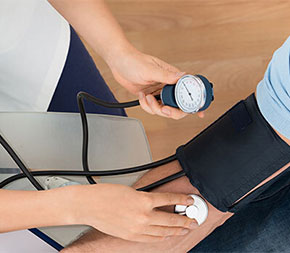
From temperature to blood pressure, some CNAs are responsible for taking and recording patient vital signs. Routine tasks such as these are typically the initial steps of a patient’s visit to a physician’s office or hospital, which means the CNA has the responsibility of making a positive first impression for the medical team.
4. Maintain a clean environment
In line with meeting patients’ basic needs, the duties of a CNA often include making beds and helping clean rooms. This can mean cleaning out bedpans, changing soiled sheets, sanitizing surfaces and cleaning up bodily fluids. Routine deep cleaning like mopping or vacuuming a patient’s room is usually handled by designated housekeeping staff in long-term care facilities, and Environmental Services (EVS) staff take care of the biggest clean-ups in hospital settings.
5. Document information in patient charts
Just like nurses, CNAs also need to do charting. This includes documenting what they did for patients, recording patient vital signs and noting any changes or concerns about the patient’s behavior.
“Their plan of care is based off what a lot of what we put in there. People think that what we chart is just the basic ADLs and it doesn’t really mean anything, but it really does because their care plan is based off what we say,” Perry said.
6. Answer calls for help and observe changes in a patient’s condition or behavior
If a patient falls, gets hurt or needs assistance for any other emergent reason, CNAs must be ready to step in and help.
Working so closely with patients on a daily basis, CNAs observe not only the obvious changes in a patient’s physical condition but the subtleties of their emotional state. That intuition can have an immeasurable impact on helping patients make it through a trying recovery or come to terms with a long-term condition. Observational skills are also important for detecting changes that could indicate more care is needed—for instance, if someone requires more advanced memory care.
Do a CNA’s duties change depending on where they work?
CNA duties are fairly uniform across work settings, but there are some slight differences. Work settings also affect the typical patient population you care for. The most common CNA workplaces include:
Assisted living facilities: Assisted living facilities offer apartment-style housing for elderly adults with support for daily tasks. Some assisted living facilities have designated memory care units for adults with dementia or Alzheimer’s, while others do not. “Assisted living patients are a bit more capable, so they require less assistance than skilled care patients,” Spencer said.
Skilled nursing facilities: Skilled nursing facilities provide round-the-clock medical care and rehabilitation services for more complex medical conditions. “Skilled care often has more dementia and memory care residents, but those patients can end up in the hospital also,” Spencer said. “It also has a younger population with chronic illnesses and disabilities.”
Hospitals: CNAs working in hospitals encounter a wider range of patient ages and medical conditions. Their role still focuses on assisting patients with ADLs. “Hospital care has a quicker turnover as patients are admitted and discharged faster compared to long-term care or assisted living,” Spencer said.
“In the hospital setting, we have more people who can ambulate and do stuff for themselves,” Perry said. “We also have more skills we can use. We do vitals, we do blood sugar checks—which you cannot do in long-term care—and we also take out IVs and catheters, so our charting is a lot more extensive in the hospital.”
What about home health?
CNAs can also work in home health settings, meaning they visit patients in their own homes. This kind of work can offer a lot more autonomy, which also requires more responsibility.
“In home health, you’re out there by yourself. You go into people’s homes, and you don’t have a nurse to fall back on. So if you walk into an emergency situation, you have to be able to do the CPR and be trained to handle the situation,” Perry said “We also help them with basic ADLs, too—that’s still part of our job no matter what area you work in.”
Perry said that when working in home health, you have to keenly observe a patient to determine if more care is warranted. For instance, if she notices a patient has bruises and they tell her they fell in the night, she has to follow up on that.
“I have to assess the patient and see if we need to go to the emergency room. I have to contact the family, contact the doctor and fill out an incident report. I’m doing more nurse-based tasks that you cannot do in long-term care.”
The CNA’s role: Duties that transcend a job description
Whether in a hospital, assisted living facility or a memory care unit, CNAs are caring for patients in their most vulnerable state. An important aspect of the job that doesn’t always fit neatly into a task list is the emotional labor they perform on a daily basis.
“We’re also doing emotional and spiritual support. We’re there for patients on many different levels,” Perry said. “We do the basic care, but while we’re in the room with them we’re getting to know them, we’re developing a bond with them. We get to know their wants and needs and desires. It’s more than just task-oriented-work.”
“People should realize that this is a challenging career in that the nursing assistant will be taking care of people with many different problems,” Spencer said. “The nursing assistant needs to have excellent communication skills and work well with other team members. This is a challenging career, but also a rewarding one due to the positive impact one can make on someone’s life.”
“When people can’t make decisions anymore and they don’t know what they want or need, we make those decisions for them in their best interest,” Perry said. “We become a version of them by allowing them to live with dignity and have some form of quality of life, and that’s how I want people to look at it. It’s not just doing basic dirty work that no one else wants to do. You’re building bonds with them, you’re getting to know them, and they trust you explicitly. You become their lifeline.”
Perry explained that CNAs often end up forming bonds with patients’ families as well.
“Families come to trust you and can go home and sleep at night,” she said. “Those are really important things that people need to know, that it’s more than just the task that you’re assigned to do. It’s personal. I want everybody to know that I when I train [CNAs], I want them to be the CNA that they would want taking care of them.”
How can I become a CNA?
All CNAs must complete a state-approved CNA training program, typically lasting between four and 12 weeks. After completing their education, most CNAs must pass a competency exam in order to obtain a state-issued license or certification and begin working.
Working as a CNA can be a rewarding career for life, but many choose to gain experience as a CNA on their way towards becoming a licensed practical nurse (LPN) or registered nurse (RN). The skills you develop as a CNA directly translate to these other nursing positions, and it can be a great resume booster when applying to LPN or RN degree programs.
If you think you have what it takes to be a CNA, take the first step towards your career and start searching for CNA education programs today.