
In this Article


By: Sara J. Nguyen

Professional insights: Marie Scalogna-Watkinson
Physical Therapy Assistant At a Glance
What Is a PTA?
Physical therapy assistants (PTAs) work under the supervision of a physical therapist to help people regain or maintain body motion, ease pain, and lead life to the fullest. The profession is growing fast, and a variety of healthcare facilities need PTAs to help treat patients.
In addition to jobs being in high demand, being a PTA can be a rewarding career.
“What is notable about being a PTA is the impact you can have on people’s lives,” says Marie Scalogna-Watkinson, PTA, LMT, and owner of Spa Chicks on the Go in New York. “It is such an incredible feeling when you can reduce or eliminate another person’s pain and lead them to optimum health. We as PTAs have a unique hand in the rehab process.”
Sponsored Listings
Learn How To Become a Physical Therapist Assistant
To work as a physical therapist assistant in the United States, you must graduate from a Commission on Accreditation in Physical Therapy Education-accredited physical therapist assistant education program and pass a state-administered national exam to obtain licensure or certification required in most states.
Use these steps as a guide to pursue a career as a physical therapy assistant.
Apply to CAPTE-accredited PTA programs.

You must graduate from a physical therapist assistant program to learn the skills of a successful PTA and earn your PTA license. Programs must be accredited by the Commission on Accreditation in Physical Therapy Education (CAPTE).
Finish your degree and take the National Physical Therapy Examination (NPTE).

Most PTA programs will take about two years to complete through a combination of classroom and laboratory courses. Most programs also have students complete a clinical experience in a health-care facility as part of their graduation requirements. As you are finishing your degree, you will be eligible to take the NPTE. You must pass this exam in order to obtain licensure.
Apply for a PTA license in your state.

Most states only require that you have a degree from an accredited PTA program and have passed the NPTE in order to earn your PTA license. Be sure to check with your state’s licensing requirements to determine if anything else is needed to get your license.
Find a job as a PTA.

With a PTA degree and license in hand, you may be qualified for many entry-level PTA positions. Some positions and employers may also want a few years of experience and/or additional training.
Consider advancing your credentials.
There are a number of programs available to PTAs to gain additional, specialized skills. Exploring these career development opportunities, such as the American Physical Therapy Association’s PTA Advanced Proficiency Pathways program, may make you a more competitive job candidate.
What PTAs Do and Where They Work
A typical day for a physical therapy assistant will depend on where they work. Hospitals, rehabilitation centers, outpatient clinics, and even in-home care agencies employee PTAs.
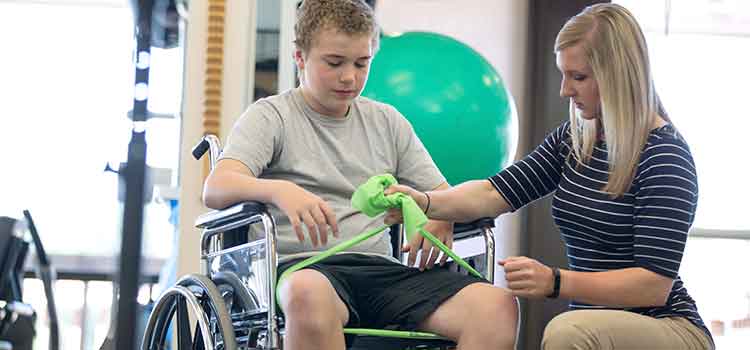
Despite the various work settings, PTAs usually have the same responsibilities to their patients, including helping them through therapeutic exercises to build strength and endurance, regain motion, and ease pain. PTAs also use massage and help patients fit and adjust medical gear such as braces.
Some patients might be recovering from surgery, an accident, or a sports injury. Others may have suffered a stroke or are trying to compensate for the symptoms of a chronic disease.
Typical responsibilities for PTAs include:
Important Skills and Traits
Do you like interacting with people in a fast-paced environment? Are you a collaborator willing to pitch in? Here are some skills and traits that can play a role in the success of a physical therapy assistant.
- Be a team player:
- A PTA will work with multiple medical professionals as a team. “You need to be able to carry out the treatment plan and direction of your supervising PT, yet also be able to give directions to aides,” says Scalogna-Watkinson.
- Time management skills:
- It’s key that a PTA has excellent time management skills. For example, says Scalogna-Watkinson, being late to work can have a snowball effect on your entire day and cause delays in patient appointments.
- Ability to multitask:
- You’ll often treat multiple patients at the same time. Being able to juggle time and tasks is paramount to success as a PTA.
- Empathy:
- PTAs should be compassionate and caring because their patients many times are in pain or experiencing physical difficulty. “You should be able to be present and truly listen to them,” says Scalogna-Watkinson.
- Good communication skills:
- “The success of any team depends on everyone listening to each other, having mutual respect, and being able to pitch in to help another staff member,” she says.
Physical Therapist Assistant vs. Physical Therapist
The roles may sound similar, but they are separated by education, responsibilities, and salary, as this chart shows.
| Physical Therapist Assistant | Physical Therapist | |
|---|---|---|
| Education Required: | Associate Degree (2-3 years) | Doctor of Physical Therapy (DPT) degree (4 years for bachelor’s degree, plus 3 years for DPT degree) |
| Responsibilities: | Assisting PT in executing treatment plan; also, possible clerical duties | Evaluating and diagnosing patients and developing individual treatment plans |
| Median Nationwide Salary: | $65,510 | $101,020 |
Salary source: U.S. Bureau of Labor Statistics, 2023
Education
Many community colleges and universities have associate degree programs for physical therapy assistants. While location and tuition costs may be primary reasons for choosing a school, here are some other factors to consider.
What to Look for in a School
- Accreditation:
- You’ll need to attend a program accredited by the Commission on Accreditation in Physical Therapy Education (CAPTE). Accreditation ensures that a PTA program provides quality education to its students. If your program isn’t accredited, you won’t be able to take the national exam required for state licensure, which means won’t be able to work as a PTA.
- Flexibility:
- Most PTA programs are full time, but you may find a few that offer some classes online, if you need that flexibility due to other responsibilities. However, you’ll still be required to attend clinics, internships, and labs in person.
- Connections with local medical institutions:
- Take the time to look at a school’s relationship with local hospitals, nursing care homes, outpatient clinics and other settings. This can be an indicator of where you might end up doing clinical internships.
Prerequisites
In addition to a high school diploma or GED, some colleges and universities also require prerequisite classes like anatomy, introduction to physical therapy, and medical terminology. This can vary by school, so you should do your research to determine requirements.
PTA programs can also require immunizations, CPR certification, and drug screenings upon enrollment.
Curriculum
PTA programs focus on coursework related to the human body. Some of the courses you can expect include:
Time to Complete
An associate degree usually takes two years to complete. This includes an average of 16 weeks of full-time clinical experience. Because of this, PTA programs usually are not offered part time.
Clinical Requirements
PTA students usually spend 75% of their time in the classroom and lab. The remaining 25% is dedicated to clinical internships and gaining hands-on experience.
Clinical experience usually begins in the second year of school, when students work with a clinical instructor to apply what they’ve learned in a physical therapy setting.
While some programs will let you get all your clinical experience in one type of workplace, others will place you in several healthcare settings—such as a hospital, nursing home, or rehab clinic—for a wider variety of work experience.
Most programs include about 16 weeks of clinical work, and students are expected to work full time during their internship.
Online PTA Programs
A PTA program may have some coursework online, but internships and lab classes are in person. You may be able to find institutions that are willing to let students take prerequisites and a limited amount of coursework online.
PTA Certifications and Licenses
Physical therapy assistants must be licensed to work. To qualify, they must graduate from an accredited PTA program and take a version of the National Physical Therapy Examination (NPTE), which is administered by the Federation of State Boards of Physical Therapy (FSBPT).
Passing the exam demonstrates that a person has the knowledge to do their job safely.
Certification
Professional PTA certifications are optional, but they’re worth serious consideration because they can demonstrate a PTA’s knowledge or skills.
“I highly suggest taking continuing ed and certification courses that apply to your specialty,” says Scalogna-Watkinson. “For instance, if you work in a hospital or nursing home setting, you may want to take a vestibular certification. If you work in a sports orthopedic office, you may want to take an orthopedic taping course.”
Taking courses or earning certifications will not increase your salary as much as they would for a physical therapist, Scalogna-Watkinson says, “but they will make you stand out in a crowd.”
Depending on your specialty, some possible certifications or courses include:
- Certified Kinesio Taping Practitioner (CKTP):
- Kinesio taping lifts the skin to ease pain and encourage lymphatic drainage, which can reduce swelling.
- Myofascial Release:
- This technique helps relax contracted muscles to improve blood flow and lymphatic circulation.
- Vestibular Rehabilitation Certification (VRC):
- This therapy helps improve balance and reduce dizziness.
You can also choose the American Physical Therapy Association (APTA)-sponsored PTA Advanced Proficiency Pathways program. A physical therapy assistant can specialize in one of these areas:
There are a few prerequisites for this certification program. A person must be a licensed PTA and a member of the APTA. They will also need to complete a few courses covering topics such as ethics and professionalism.
Is PTA a Stepping Stone to Physical Therapy?
Many physical therapy programs require applicants to have previous healthcare experience. Working as a PTA can help cover the mandated 1,500-5,000 hours that PA programs look for in an applicant. You will also need to earn a bachelor’s degree and cover the prerequisite coursework to be considered for acceptance into a doctoral program.
But if your career goal is to become a physical therapist, it may not be best to start as an assistant.
“If you want to be in the PT field, I would urge students to go straight into a PT program,” says Scalogna-Watkinson. “If you become a PTA first, it will take about three years of your time, plus a tuition bill at the end.”
Some PTA and general education credits may fulfill prerequisites for PT programs, but the coursework is significantly different for these fields. That means that a physical therapy assistant looking to become a physical therapist might have to start from scratch with an undergraduate degree if their previous credits are more than seven to 10 years old.
However, there are limited PTA-to-PT bridge programs designed to help physical therapy assistants interested in becoming physical therapists. This may be an option if you live near the campuses that offer these programs.
Median Annual Salary
For many, becoming a physical therapy assistant is appealing because you don’t need to spend many years in school to earn a decent salary. The U.S. Bureau of Labor Statistics 2023 data reports PTAs earn a median annual wage of $65,510.
Take a look at the salary you could earn in your state.
While education and experience may make a difference in your salary, there are other factors that can also play a role.
For instance, where you work can also be a factor. According to the BLS, the highest-paying metropolitan areas are:
The medical setting in which you work also can affect your salary, partly because demand is higher in some types of workplaces. The BLS says the highest-paying facilities are:
| Workplaces | Median Annual Salary |
|---|---|
| Nursing care facilities | $76,110 |
| Home healthcare services | $79,000 |
| Hospitals | $66,730 |
| Offices of physical therapists | $60,340 |
Job Outlook
PTA employment is projected to grow by a notable 22% through 2034, a rate that’s much higher than the average for all occupations. This is partly because the U.S. population is aging and needs more healthcare in general and for chronic conditions.
Take a look at the demand for physical therapy assistants in the highest and lowest ranking states.