

Home

Become a Medical Laboratory Technician

Discover medical laboratory technician training and careers.

Return to Research Health Careers

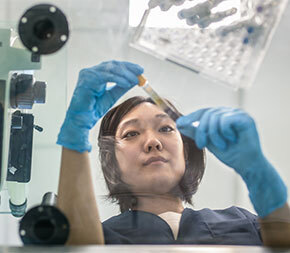
As a medical laboratory technician (or clinical lab technician), you'll work under the supervision of a medical technologist or physician to perform tests on tissue, blood and body fluids to help physicians diagnose and treat diseases.

Medical Lab Technician Job Description

Your typical duties as a medical lab tech will likely include the following:

  • Preparing blood, urine and tissue specimens for analysis
  • Using sophisticated laboratory equipment to look for bacteria, parasites and other microorganisms
  • Monitoring tests and procedures
  • Analyzing the chemical content of fluids
  • Matching blood for transfusions
  • Testing for drug levels in the blood to show how a patient is responding to treatment

You may specialize in the areas of chemistry, hematology, cytotechnology, immunology, virology, blood banking or microbiology.

find medical lab technician schools

Medical Lab Technician Salary

According to the American Medical Association, the median salary for medical lab technicians is $34,270 per year, but more experienced lab techs earned up to $52,000 in 2007.

Medical Lab Technician Work Environment

Most medical laboratory technicians begin their professional careers working in a laboratory or in an acute care or community hospital. Once you gain some experience, you might work in any of the following settings:

  • Hospitals
  • Clinics
  • Private laboratories
  • Public health organizations
  • Research and development departments of pharmaceutical companies

find medical lab technician schools

Medical Lab Technician Training and Education

In addition to having your GED or high school diploma, you'll need to complete an accredited medical lab tech program, usually a 1-to- 2-year associate degree or certificate program. In the training programs, students receive a combination of classroom and laboratory instruction. Coursework usually includes the following:

  • Laboratory mathematics
  • Chemistry
  • Microbiology
  • Pathology
  • Microscopy
  • Immunology

Medical Lab Technicians vs. Technologists

Technicians work under the supervision of a technologist who has more education (at least a bachelor's degree) and training than a technician. Medical and clinical laboratory technicians perform less complex tests and laboratory procedures than technologists. Like technologists, medical lab techs may specialize in a particular area or work as a laboratory generalist.

Medical Lab Technician Certification

Regulations vary from state-to-state, but certification is highly recommended because many employers may require it. After earning your associate's degree or certificate from an accredited program, you may choose to take a national certification exam. The American Society for Clinical Pathology (ASCP) and the American Medical Technologist (AMT) both offer national certification testing, which earns technicians the title of Certified Medical Laboratory Technician (MLT).

find medical lab technician schools

medical laboratory technician

Did You Know?

  • Each year, National Medical Laboratory Week is celebrated in late April.
  • Johns Hopkins Hospital opened the first clinical laboratory in 1896.

Spotlight Schools

University of Phoenix

University of Phoenix makes quality higher education highly accessible for working students. Whether you're seeking an associate's, bachelor's, master's or doctoral degree, we can help you reach your goal--and sooner than you may think.


Keiser University

Whether your goal is to improve your employability, develop leadership skills, enhance your education, improve your life, or simply study for the enjoyment of learning something new, Keiser University is designed around your needs.


Sanford-Brown Institute

At Sanford-Brown Institute, we focus your study into a short-term program enabling you the opportunity to customize your skills successfully to the specific needs of a health care setting.