In this Article


By: Anna Giorgi

Professional insights: Di Findley
Certified Nursing Assistant: A quick look
Certified nursing assistants (CNAs) work on the front lines of healthcare by providing basic care and support to individuals who can’t manage their own needs. While a CNA’s responsibilities can vary according to an individual’s abilities, their services are necessary for those who need assistance due to age, disability, injury, or illness.
CNAs enter the field for a variety of reasons. Working as a CNA is a great way to gain hands-on healthcare experience without the requirement of a college degree. For prospective nurses and other healthcare professionals, it’s an opportunity to test the waters before making a bigger commitment. For others, it’s the security of an in-demand position that offers the potential for flexible scheduling. For anyone in this role, being a CNA can provide the satisfaction of helping others in need.
“It’s a great opportunity to find out if they’ve got what it takes to work in this field,” says Di Findley, executive director of Iowa CareGivers. “It is a good place to start, but there doesn’t have to be an expectation that they go on past this, either. For many, it is a chosen career.”
Steps to Becoming a CNA
Here are the steps you’ll need to take to become a CNA:
Have or obtain a high school diploma or GED.

Graduation from high school or a GED is the minimum requirement to enroll in a CNA education program.
Complete a state-approved CNA program.

CNAs are usually overseen by a state’s board of nursing or department of health. Find out the type of education and clinical education you’ll need to qualify for a CNA license in your state.
Pass your state’s approved CNA competency exam.

State-required CNA competency exams are administered by third-party providers. Passing the exam places your name on your state’s registry of CNAs, licensed nursing assistants, nurses’ aides, or other title that your state uses for this position.
Find a job.
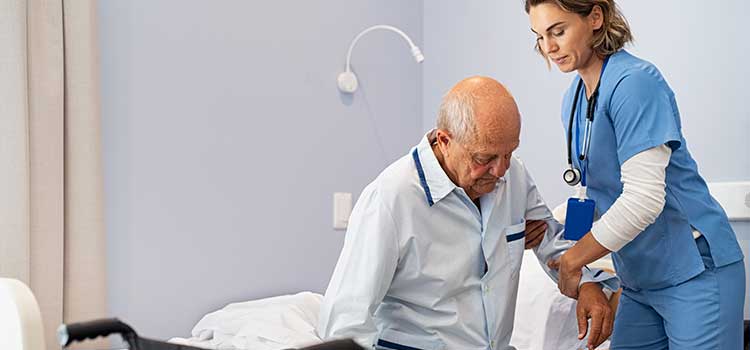
Certified CNAs are in demand. Consider your career goals, professional preferences, and lifestyle when determining where to start your job search. You’ll likely be able to choose between full-time and part-time options in both clinical and non-clinical settings.
Maintain your CNA certification.

The requirements necessary to maintain your CNA certification vary by state. You may have to prove you worked a specific number of hours as a CNA in the two years preceding your renewal date. Some states also have continuing education requirements.
Consider additional education.

You may find that earning your CNA certification ignites your interest in other roles. Many CNAs use the position as a stepping stone to jobs in nursing such as licensed practical nurse (LPN). If you prefer the CNA role, you can expand your skills with specialty certifications in areas like hospice care, medication administration, and rehabilitation.
CNA Job Duties
Many of the job duties performed by a CNA are categorized as activities of daily living, but they also include much more than that. Here is a sample of some typical job duties:
- Perform daily hygiene tasks:
- Tasks involved in daily hygiene can involve toileting, bathing, and dressing. Depending on a patient’s abilities, these duties can involve cleaning out bed pans or personal bathing.
- Take vital signs:
- Taking and recording a patient’s temperature, blood pressure, and other vital signs help to monitor their well-being. A CNA typically records these measurements and reports them to the supervising nursing staff for interpretation.
- Facilitate patient care:
- The daily intimate contact that CNAs have with patients means they can notice blood in urine, bruises, and other subtle changes that may require care. “They can also be very strong liaisons between the people they serve and family members and other staff,” Findley says. “Because they provide most of the hands-on care and support, CNAs are more likely to notice changes in an individual’s behavior or health. Those observation and reporting skills are vital to the overall health and well-being of those served.”
- Feed, make beds, clean the room:
- Feeding can involve preparing meals, serving them, or assisting with feeding. The CNA is also typically responsible for changing sheets and maintaining a clean, safe environment in the patient’s living area.
- Provide companionship:
- Spending so much one-on-one time with a patient allows a CNA to establish close relationships with the patients they serve. “The relationships that CNAs develop are really important,” Findley says. “In some cases, the people they support don’t have family or their family lives far away, so the CNA may be the closest thing they have to a family member and someone truly caring about them.”
A Day in the Life of a CNA
It’s unlikely that any two days will be the same when you’re working as a CNA. Changing patient needs, emergencies, and other variables can force a CNA to regroup and re-prioritize to provide necessary service and support.
Roles and responsibilities can also vary by work environment. CNAs who provide home care may provide more social support and interaction than those in hospitals or other institutions since they’re likely spending longer amounts of time with the same patients.
CNAs working in a hospital or other type of facility may have to handle multiple patients who need help simultaneously. Here is what a CNA may do on a sample eight-hour day shift:
Workplaces
The specific tasks you perform during your workday will depend to a great extent on your workplace. While the majority of CNAs work in nursing care facilities, retirement communities, hospitals, and home care, there are other places to use your knowledge and skills.
No matter where you work, it’s important to consider details like your personal preferences as well as your employer’s reputation. Researching workplace environment, staffing ratios, and employee satisfaction can help you find a workplace in which you’ll thrive. “CNAs have choices,” Findley says. “They’re in big demand, so they can be a little more selective. We advise them to check the facilities out before they apply.”
Here are some typical workplaces where you’ll find CNAs:
- Nursing care facilities
- Hospitals
- Home healthcare services
- Memory care homes
- Government
- Outpatient care centers
- Junior colleges
- Elementary and secondary schools
- Insurance carriers
- Religious organizations
- Continuing care retirement and assisted living facilities
- Scientific research and development services
Important Skills and Traits
While CNAs provide practical services that enhance a patient’s quality of life, there’s no dispute that the job can often be physically demanding and emotionally draining.
So, why does anyone choose to become a CNA? “The rewards of working as a CNA can include personal connections and relationships with the people served and feeling good about making a difference in the lives of those people,” Findley says. “The job itself is extremely challenging, so a commitment to serve other people needs to be pretty strong.”
Here are some of the most important skills and traits you’ll need if you’re considering a CNA career:
- Dependable:
- Your responsibilities are critical to the smooth operation of a facility or the daily well-being of patients in home care.
- Physically fit:
- You’ll have to be capable of moving, adjusting, and supporting patients without injuring them or yourself.
- Compassionate:
- Sometimes the most important services you deliver involve empathic listening and emotional support.
- Good communicator:
- You must be able to discuss issues and instructions with both clinical and non-clinical members of a patient’s care team.
- Observant:
- You’ll have to pay close attention to identify subtle physical and emotional changes in a patient.
- Detail oriented:
- You have to follow instructions and procedures appropriately to support a patient’s needs and desired outcomes.
- Proactive:
- While a CNA works under the direction of a licensed nurse, they can take the initiative in working to prevent common problems such as infections, bed sores, and even dental problems.
- Positive personality:
- In addition to boundless physical energy, you’ll also need the ability to project a positive, encouraging attitude to patients who need hope or motivation.
What’s the Difference? CNA vs Medical Assistant vs LPN
When considering an entry-level role in healthcare, it’s easy to get confused about the types of responsibilities associated with different titles. While roles like CNA, medical assistant, and LPN are all categorized as entry-level positions, there are unique details specific to each position.
Factors such as length of required education, average salary, and typical responsibilities may make one role more appealing than the others. Considering your career goals, personal preferences, and even personality against these details can help you determine which role may be right for you.
Roles
Patient Care
Education Required
Length of Education
Median Annual Salary
Salary source: U.S. Bureau of Labor Statistics, 2023 Occupational Outlook Handbook
CNA Education
While a CNA is considered an entry-level position, you’ll need the appropriate education and clinical training to work in this role. Federal law requires that CNA programs provide a minimum of 75 hours of training with at least 16 hours of supervised practical or clinical training, though many states set criteria that exceed these standards.
It’s critical to ensure that your CNA program meets your state’s CNA educational requirements. Check with your state board of nursing or department of health to avoid selecting a program that doesn’t meet your state’s criteria.
While each program sets its own prerequisites and curriculum, here is what a typical CNA program includes:
Prerequisites:
- High school diploma or GED equivalent
- Entrance exam and/or criminal background check
Curriculum:
- Classroom education in areas related to patient care
- Human anatomy and physiology
- Oral and topical medication management
- Emergency care beyond CPR
- Infection control and prevention
- Specialized care for the elderly, infants, and other groups
- Care of specialized conditions like diabetes, cognitive impairment, and diabetes
- Mastery of medical technology
- Patient advocacy and support
- Proper use of medical records software
- Safety protocols
- Training for physical/clinical tasks required by CNAs
- Proper body mechanics to protect yourself and your patient
- Safe transfer and lifting procedures
- Maintenance of a safe and clean environment
- Vital sign measurement and reporting
- Daily personal hygiene and personal care management
Time to complete:
4-12 weeks
Clinical requirements:
Your complete program time includes both instructional hours and clinical practice. State guidelines determine the minimums for each category. As an example, a 120-hour, six-week CNA program may include four weeks of classroom education and two weeks of clinical practice.
Certification
After completing a CNA education program, you’ll have to earn certification or licensure in your state to qualify to work as a CNA there. This step is important for job prospects, since nursing homes, Medicare, and Medicaid facilities can only use CNAs listed on their state registries.
Most states require that prospective CNAs pass a competency exam administered in test centers by third parties throughout your state. While every state can use its own CNA competency exam, 20 states instead choose to use the National Nurse Aid Assessment Program (NNAAP); an exam developed by the National Council of State Boards of Nursing (NCSBN).
While there are slight variations, a CNA competency test includes the following components that you must complete in the same day:
Each state determines their own passing score and time allowed. A minimum score of 70-75% is typical for the knowledge section, while most states require that you earn 100% on the skills portion.
After passing your state’s required exam and meeting any other state-specific requirements, your name will be placed on your state’s registry of CNAs, licensed nursing assistants, or title that your state uses for this role.
Whether you’re called a “certified” nursing assistant or “licensed” nursing assistant doesn’t change your scope of practice. Earning certification or licensure demonstrates that you’ve proven you have the level of knowledge and skills necessary to care for patients in this role and are authorized by the state to do so.
Specialty Certification
After you’re certified, you can earn optional professional certifications to expand your skills and stand out in a field of job applicants. To earn a specialty certification, you must meet the education and experience requirements of the certifying organization.
Some common CNA specialty certifications and the organizations that award them include:
- CNA II:
- Available in some states to CNAs with specified experience and/or training
- Certified Alzheimer Caregiver:
- Offered through the National Certification Board for Alzheimer Care
- Certified Hospice and Palliative Nursing Assistant:
- Offered by the Hospice and Palliative Nurses Association
- Certified Wound Care Associate:
- From the American Board of Wound Management
- Medication Aide Certification:
- From the National Council of State Boards of Nursing, Inc.
Prepping for the CNA Exam
The purpose of the CNA exam is to prove that you’re qualified to work as a CNA. If you have a firm grasp of the content you studied in your CNA course, you should be able to pass the exam after a period of review and practice.
- Create a study plan with designated days and times for test preparation leading up to your exam date. Don’t procrastinate. It’s easier to review the material soon after completing your education.
- Gather a list of study resources that work best for you. Options include textbooks, videos, online checklists, and other learning materials like CNA flashcards.
- Establish a study group. This can help you talk through the material to better understand it, while also getting encouragement and emotional support.
- Take more than one CNA practice test. Google “CNA practice test” to find a wide range of options.
- Talk to professional CNAs to find out what strategies they found useful when preparing for their exam. Ask them about their test experience and what to expect.
- Look for “CNA skills” videos on YouTube, where you can find instructors demonstrating proper technique. Practice your CNA skills on friends, family, and members of your study group until the movements feel natural and automatic.
Salary
The salary you earn as a CNA depends on a wide range of variables. Factors such as your geographic location, years of experience, employer, area of specialization, and the demand for qualified CNAs can affect the amount of money you earn. You may also have the chance to supplement your base salary with overtime since a CNA typically doesn’t qualify as an employee exempt from overtime pay.
Explore median salaries, as reported by the U.S. Bureau of Labor Statistics, by state here:
Salary by Region
A high cost of living, a large senior population, and a shortage of qualified CNA candidates can often boost salaries in a city or region. The BLS reports that nine of the 15 highest-paying U.S. metropolitan areas for nursing assistants are in California.
Top metro areas for CNA salary:
Salary by Workplace
Where you work can also determine how much you earn. While you’ll find industry averages for specific types of workplaces, you may also find that pay varies among employers in the same industry. Employer characteristics such as size, public versus private facility, and need can affect your salary.
Sample of CNA annual median salary by workplace:
| Work Environment | Average Annual Salary |
|---|---|
| Scientific research and development | $48,490 |
| Home healthcare services | $35,640 |
| Nursing care facilities | $38,730 |
| Medical and surgical hospitals | $40,840 |
| Retirement communities and assisted living | $37,660 |
CNA Job Outlook
With a growing senior population and medical advances that help more people live longer, the demand continues to soar for qualified healthcare professionals who can provide the daily care and support these individuals require. CNAs are positioned to fill these needs for patients of all ages and abilities at the bedside and in residential settings.
According to the BLS, employment for CNAs is expected to increase 2.3% through 2034, right at the average for all U.S. jobs combined. The growing job market is likely to reflect the societal preference for in-home versus institutional long-term care. “The demand for home and community-based levels of care is growing and it’s going to continue to grow, so I think that’s the future,” Findley says.
Geographic areas with higher numbers of senior citizens are likely to experience higher demand and, consequently, more opportunities for CNAs seeking a range of opportunities and competitive salaries. Ultimately, it’s wise to seek out information through your educational program, professional organizations, or social media forums to explore where you’re likely to find the types of opportunities you’re seeking.
Highest demand states:
Lowest demand states: