

By: All Allied Health Staff
Updated: December 4, 2025
Surgical Technologist At a Glance
What Does a Surgical Tech Do?
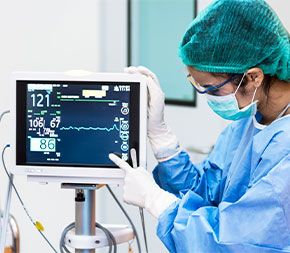
Surgical technologists play a crucial role in the operating room by assisting surgeons and their teams. Their responsibilities include passing sterile instruments and supplies, setting up surgical equipment such as robotics, and holding organs in place during procedures. Additionally, surgical technologists may handle specimens for laboratory analysis, ensuring efficient and safe surgical processes.
Job Environment
Most surgical technologists work as members of a healthcare team alongside physicians and surgeons, registered nurses, surgical assistants, and other workers in a hospital. They all wear scrubs while in the operating room, in addition to masks and other preventative shields. As a surgical technologist, you’ll be on your feet, and you may be exposed to unpleasant sights, smells and materials.
In addition to helping prepare for and carry out surgeries, you may also prepare, care for, and dispose of specimens taken for lab analysis. With patients, you may apply dressings and help ease them into recovery rooms.
Life in the operating room (OR) can be hectic and demanding, with life-threatening emergencies often occurring despite hours of careful planning and prep. As a key member of the team, the surgical technologist must anticipate the needs of the patient and the surgeon to ensure that each operation goes as smoothly as possible.
Here are the tasks a surgical technologist must perform and be prepared for with every surgery:
Preoperative: Sterile Hands
The surgical technologist is the first person to enter the OR before surgery. During this preoperative phase, the surgical technologist adheres closely to the following routine:
Intraoperative: The Third Hand
During the intraoperative phase of the surgery, surgical technologists are still responsible for maintaining the sterility of the OR, but they also effectively become a “third hand” to the surgeon and surgeon’s assistant during the procedure and perform the following tasks:
At any time during an operation, if a tool is missing or contaminated, the delay or resulting infection could cost a patient his or her life. That is why surgical technologists must be diligent and thorough at all times.
Postoperative: Tying Things Up
As the operation concludes, surgical techs are responsible for the following:
Thinking-On-Your-Feet: Cell Phones in the OR
While surgical techs aren’t expected to work miracles, they must be able to think quickly on their feet in emergency situations. During a recent hospital blackout and emergency generator failure, one quick-thinking surgical tech, with the help of the patient’s family member, rounded up enough cell phones to illuminate the OR while surgeons completed an emergency appendectomy.
Career Advancement
Certification can help a surgical technologist in finding the right position, and is a good way to advance your education. You can earn various types of certification in classroom, online, and prep programs, such as:
As advancements in technology have made surgery safer, and as the aging population requires care, surgery technologists will be ensured steady work. Prospects are best for those who’ve completed an accredited education program and who maintain their professional certification.
With experience and additional education, surgical technologists can advance to become surgical assistants, where they will have more responsibility and command higher salaries. Surgical technologists also occasionally advance to other healthcare occupations, such as physician assistants or registered nurses.
Sources: U.S. Bureau of Labor Statistics 2025 Occupational Employment Statistics; Surgical Technologists